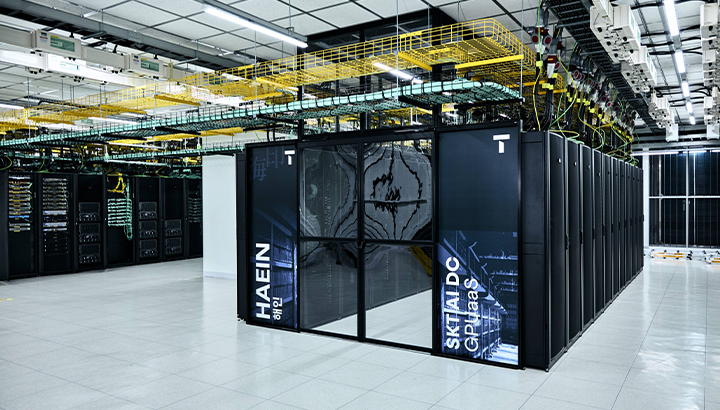
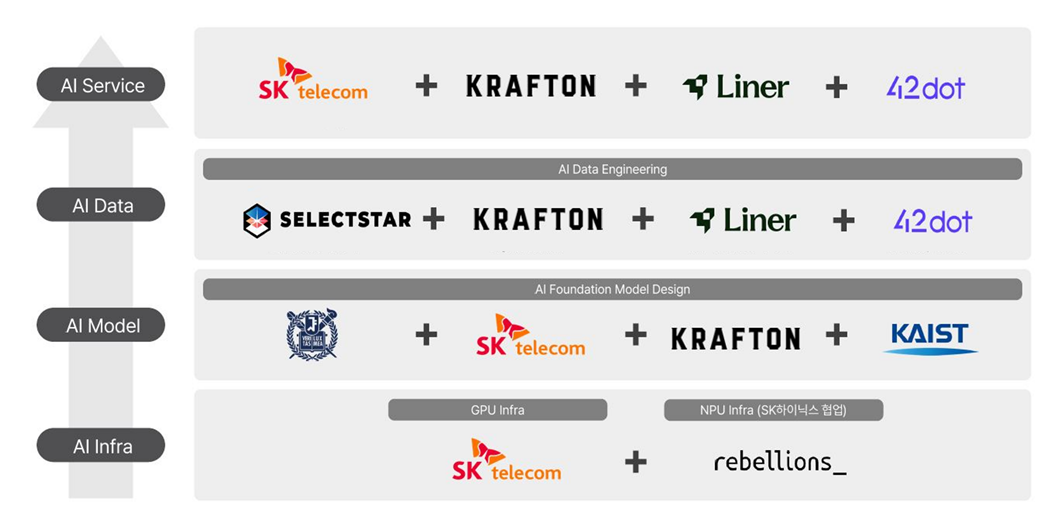
The Sovereign AI Foundation Model Project led by SK Telecom is Korea’s flagship full-stack AI alliance that covers the entire AI value chain from infrastructure to models, data and services. The SKT consortium includes Krafton, Rebellions, 42dot, Selectstar, Liner, Seoul National University and KAIST as participating members.
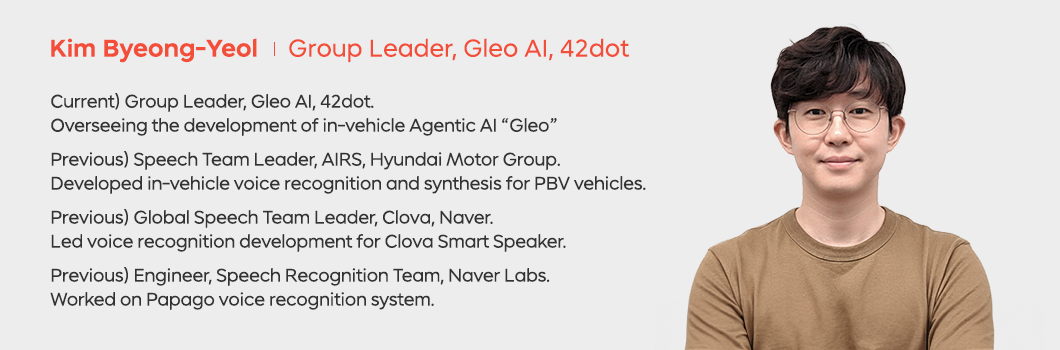
42dot, a mobility-specialized member of the consortium, is developing an intelligent mobility system that autonomously judges and responds in real driving environments, based on its experience in automotive AI development and proprietary LLM technology. SKT newsroom spoke with Kim Byeong-Yeol, Group Leader of 42dot’s Gleo AI, to discuss 42dot’s perspective on the direction of K-AI and the significance of the project.
* This article includes the views of external organizations and may not necessarily represent the official position of SK Telecom.
AI Models Integrated into Vehicles
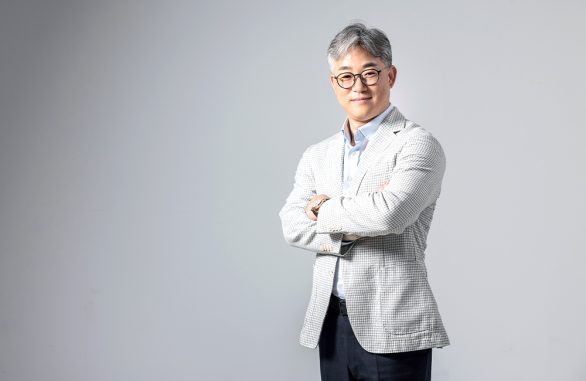
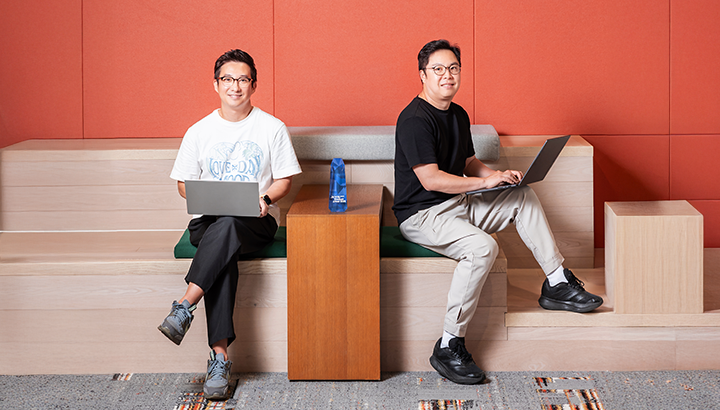
Kim Byeong-Yeol, 42dot’s “Gleo AI” Group Leader
Q. How do you feel about joining the SKT team of this project, and what motivated you to join?
A. It is greatly meaningful for 42dot to be a key partner in the Sovereign AI Foundation Model Project. The consortium is a full-stack alliance that spans the full spectrum of AI from infrastructure to models, data, and services, built on a robust structure that enables close cooperation between
industry and academia.
Leveraging our experience in developing and launching the proprietary 42dot LLM, 42dot is developing a customized in-vehicle AI agent service, targeting deployment in mass-production vehicles by 2026. With a vision to build a next-generation large-scale AI model that integrates language, multimodality, and behavioral intelligence, we joined the project to help drive the realization of K-AI with our mobility expertise.
Q. What is 42dot’s role within the consortium?
A. 42dot participates in the consortium in the domains of AI services and AI data, focusing on the development of mobility-specialized AI models. In particular, we are building on-device optimization technologies for in-vehicle agentic AI, along with a pipeline for collecting and training real-world driving data. Our mission is to optimize the consortium’s large-scale foundation model for intelligent automotive AI and ultra-lightweight on-device deployment.
Our key competitive strength is our proven capability in technology validation and commercialization, as AI agent services based on our proprietary LLM are being deployed in mass-produced Hyundai Motor Group vehicles.
Q. What do you think are the strengths of the SKT team?
A. The greatest strength of this consortium is that it has full-stack AI capabilities spanning infrastructure, models, data, and services. What sets us apart is that every participating organization, including SK Telecom, 42dot, Liner, and Krafton, is already successfully operating large-scale,
real-world AI services within their respective domains.
In addition, we have established a virtuous cycle that generates powerful synergy: cutting-edge research from Seoul National University and KAIST is rapidly integrated into SKT’s model training; service companies generate tuning data based on feedback from real deployment environments; and SelectStar efficiently aggregates this data to retrain and strengthen the model. Also, with Rebellions’ NPU infrastructure, we have secured the hardware capability necessary to scale AI services into real-world environments—another key advantage of the consortium.
Sovereign AI, Powered by Full-Stack Cooperation
Q. What do you see as the strengths of the K-AI model in the global competition?
A. The strength of the K-AI model in the global competition lies in its top-tier performance and excellent efficiency. SKT’s A.X 4.0 model has already demonstrated superior results in Korean-language tasks compared to GPT-4o, and the upcoming version is expected to further enhance both training and serving efficiency by adopting a Mixture-of-Experts (MoE) architecture.
42dot plans to develop an on-device model based on these large foundation models to help ensure that the project results in a flagship K-AI model.
Q. What value have you gained through this collaboration?
A. This consortium has been a meaningful opportunity to reaffirm the collective value that can be achieved when diverse companies and academic institutions work together. With the goal of building agentic AI capable of natural, human-like interaction in vehicles, 42dot provides mobility data and service feedback, while exploring various technologies to optimize and lightweight SKT’s foundation model.
Looking ahead, we plan to further strengthen our technological competitiveness through model inference optimization in collaboration with semiconductor and platform partners such as Rebellions, and by actively incorporating research achievements from academic institutions including Seoul National University and KAIST. This shared vision is driven by our collective commitment across industry and academia to achieving sovereign AI through K-AI.
Q. What are the key technologies required to efficiently run large-scale models in on-device environments?
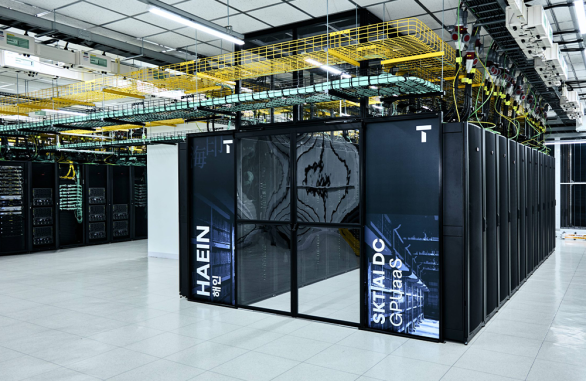
A. The key is model lightweighting. We distill the teacher model, which is trained on SKT’s large-scale GPU infrastructure, into smaller models such as 7B or 1–3B while preserving the original performance.
In addition, we work with Rebellions to ensure that these lightweight models run efficiently in real-world services, offering optimization and quantization technologies tailored to Korean NPUs such as ATOM. We believe that this three-way partnership between SKT, 42dot, and Rebellions is central to enabling on-device AI at scale.
Q. What are your plans for global expansion going forward?
A. Building on the foundation model developed through this consortium, we are accelerating the development of an in-vehicle personalized AI agent service, targeting deployment in Hyundai Motor Group’s mass-production vehicles in 2026.
We are also pursuing global expansion, focusing on markets such as North America, Europe, and India, ensuring that the K-AI model delivers tangible value to users and demonstrates the competitiveness of Korean AI technology in the global market.