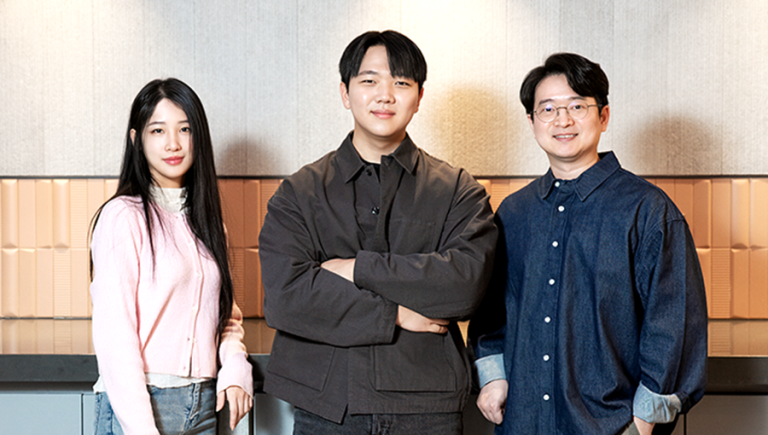
In June, SK Telecom announced plans to build Korea’s largest hyperscale AI-dedicated data center (AI DC) in Ulsan, in collaboration with Amazon Web Services (AWS) and SK Group affiliates. Slated to go live in 2027, the Ulsan AI DC aims to become a critical hub of the “AI Infra Superhighway,” leveraging SK Group’s extensive capabilities to accelerate AI infrastructure development at scale.
SKT Newsroom sat down with Prasad Kalyanaraman, Vice President of AWS Infrastructure Services, to gain deeper insights into the transformative impact of AI, AWS’s infrastructure strategy, and the outcomes of its partnership with SK. As seasoned leader with 18 years at Amazon, Kalyanaraman oversees the global team responsible for designing, planning, building, and operating AWS’s worldwide infrastructure. His team of 19,000 engineers drives the development of cloud infrastructure, including electrical and mechanical system design for data centers, as well as real estate, energy, and sustainability strategies.
* This article contains the opinions of other companies and may differ from SK Telecom’s official position.
Powering the Future of AI with Next-Level Infrastructure
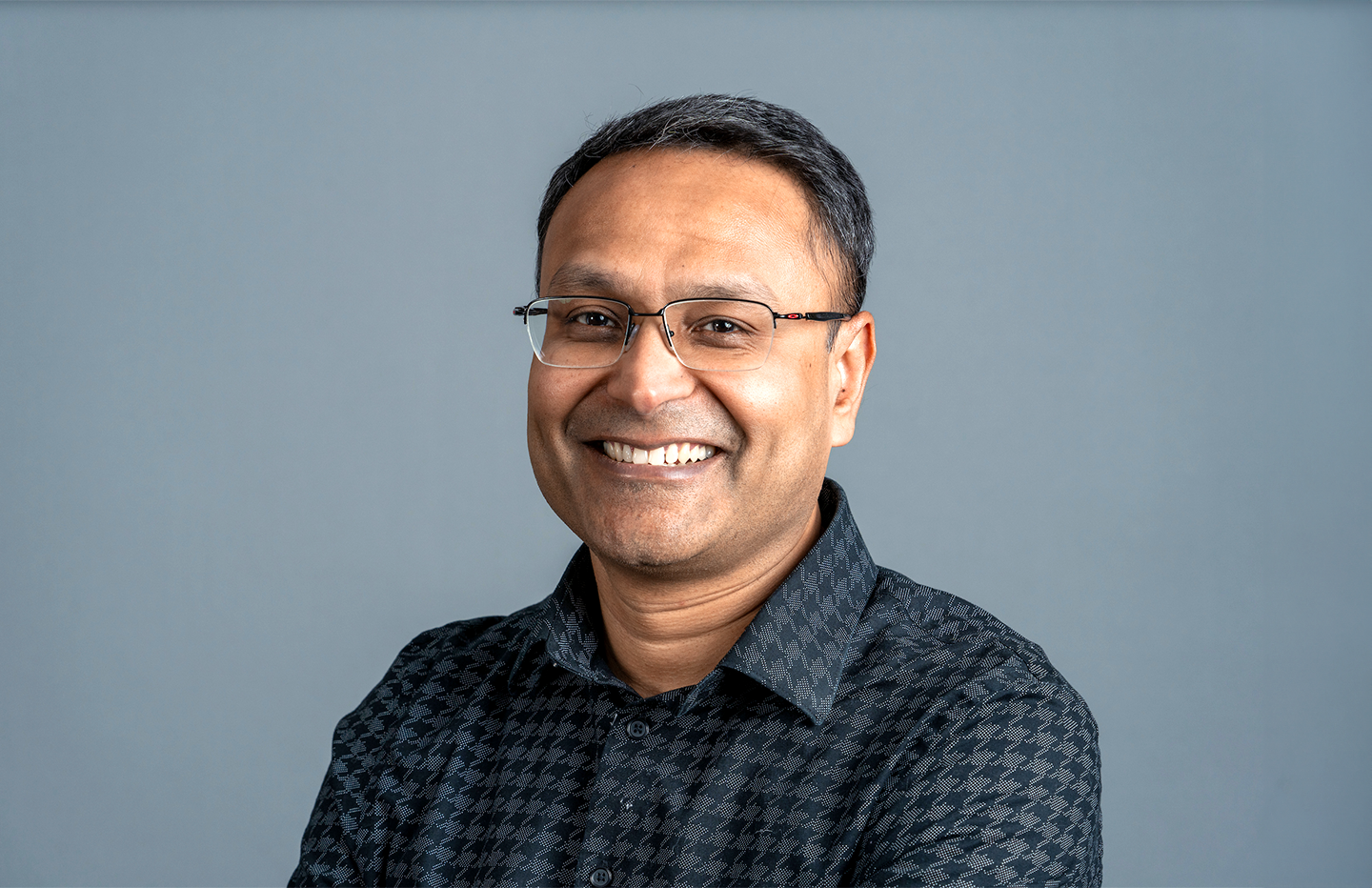
Prasad Kalyanaraman, Vice President of AWS Infrastructure Services
Q1. What’s your take on the transformative impact of AI on society and industry over the past few years?
Technologies like generative AI are once-in-a-lifetime opportunities. For us, we’ve had the point of view for 25 years that AI will help us make things easier and better for our customers. Generative AI has just accelerated this for us as we see the impact growing rapidly with each passing day. We’re seeing millions of customers across diverse industries such as healthcare, manufacturing, automotive, financial services, telecommunications, and many others, embracing AI-powered capabilities on AWS.
Looking ahead, we envision a future where generative AI isn’t just a feature but a fundamental building block of virtually every application, standing alongside traditional elements like compute, storage, and databases. Organizations will increasingly develop their own intelligent agents capable of performing complex tasks and interacting with other systems. What’s particularly exciting is that this transformation is happening right now.
This vision is exemplified by our recent partnership with SK Group, which expands AWS’s world-class cloud computing infrastructure with a new AWS AI Zone in Ulsan, Korea. Through this collaboration, we’re proud to contribute to Korea’s national AI initiative aimed at establishing Korea as one of the world’s top AI leaders. Together with SK Group, we’re not just building infrastructure—we’re laying the foundation for Korea’s next chapter of innovation and AI leadership.
Q2. Would you please highlight some of the key achievements and status of AWS in AI data center operations and AI infrastructure development?
I’m particularly proud of how AWS has consistently pushed the boundaries of what’s possible while maintaining our focus on efficiency, performance, and sustainability.
Let’s start with our custom silicon strategy that has delivered remarkable results. The growing demand for our purpose-built AWS Trainium and AWS Inferentia chips reflects their ability to help customers maximize performance while controlling costs for their machine learning workloads. Our recently announced EC2 Trn2 instances for generative AI training deliver 3x more energy efficiency than their predecessors, combining advanced silicon processes with hardware and software optimizations.
On the efficiency front, we’ve taken a holistic approach—engineering our data centers from rack layouts to electrical distribution to cooling techniques—to continuously increase energy performance regardless of workload demands.
What’s most gratifying is seeing the world’s leading AI innovators building on our infrastructure. Several of our customers are using purpose-built AWS chips today including Anthropic, Databricks, Leonardo.ai, Qualtrics, and Ricoh. Tens of thousands of organizations worldwide are using Amazon Bedrock to build their generative AI applications.
These achievements reflect our commitment to creating infrastructure that supports the cutting edge of AI development while continuously improving in efficiency, performance, and sustainability.
Q3. Could you elaborate on the strategic approach of AWS to AI, particularly regarding AI Zones?
AWS’s approach builds upon nearly two decades of experience designing, building, and operating global infrastructure at unprecedented scale. We’re not starting from scratch-we’re constantly evolving our proven foundation across our infrastructure which powers our machine learning and AI application services such as Kiro and Amazon Bedrock AgentCore to meet the unique demands of next-generation AI workloads, as well as other advanced cloud computing technologies.
That’s why we’re making adaptations through innovations in power, cooling, and hardware design. For example, we’ve developed novel mechanical cooling solutions that provide configurable liquid-to-chip cooling across both our new and existing data centers.
Power management represents another area where we’re pushing boundaries. We’ve created sophisticated software powered by data analytics and generative AI itself to predict the most efficient server placement patterns, significantly reducing stranded power—energy that’s available but underutilized.
Perhaps most impressive is our networking evolution. The UltraCluster 2.0 network we’ve built specifically for generative AI workloads supports more than 20,000 GPUs with 25% lower latency compared to our first-generation design. This delivers tens of petabits per second of throughput with round-trip times under 10 microseconds—translating to at least 15% faster model training times.
SK – AWS Partnership: A Strong Commitment to Korea’s AI Future
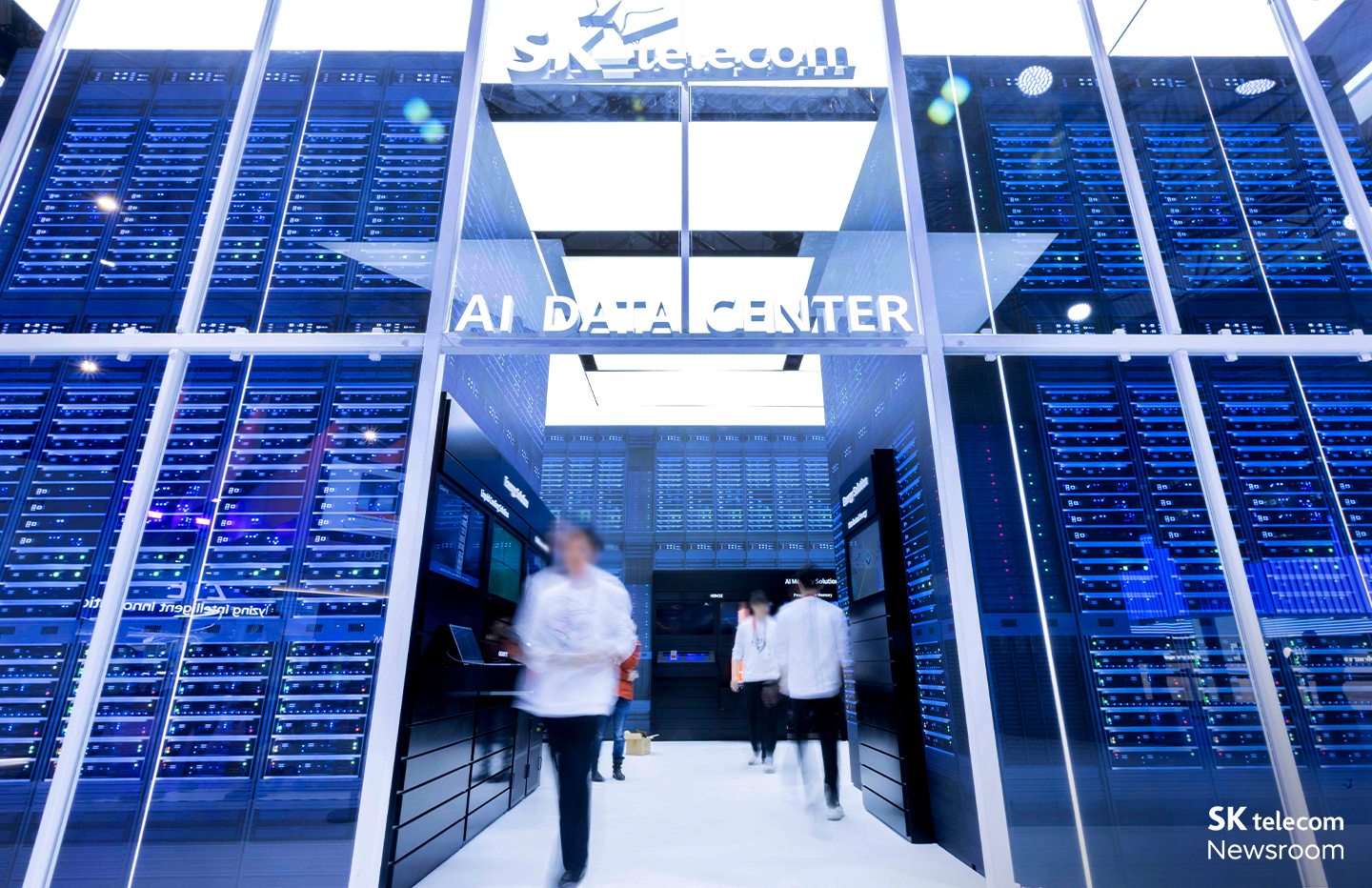
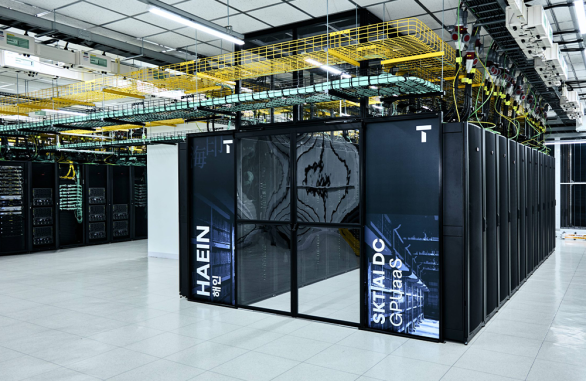
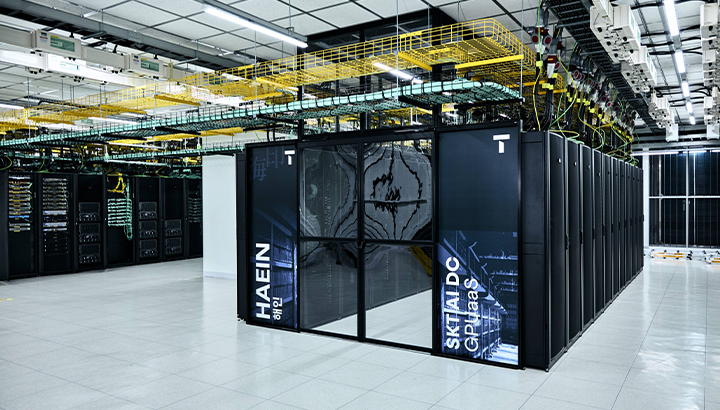
SKT’s AI DC Booth at MWC2025
Q4. Could you share the background story of the recent partnership with SK Group and what significance you believe this collaboration holds for both companies?
This partnership represents a significant milestone in AWS’s 15-year relationship with SK Group. The collaboration involves SK Group building a data center in Ulsan, South Korea for a new AWS AI Zone that will help organizations in South Korea build innovative AI applications locally while leveraging the full breadth of AWS capabilities.
Working with SK Group, we aim to empower Korea to become a global AI leader and enable Korean businesses and government organizations to drive innovation and economic growth through AI technologies. This partnership is in addition to AWS’s long-term US $5.88 billion planned investment in Korea by 2027.
The division of responsibilities is clear: SK Group will lead the construction of the data center, while AWS will establish and independently operate the AI Zone, delivering AWS’s leading AI and cloud capabilities to Korean customers. The project brings together key SK Group affiliates, including SK Telecom, SK Broadband, SK hynix, SK Gas, SK Chemicals, SK multi utility and SK AX, uniting the Group’s core competencies across ICT, energy, and semiconductors.
When SK Group’s exceptional technical capabilities combine with AWS’s comprehensive AI cloud services, we’ll empower customers of all sizes, and across all industries here in Korea to build and innovate with safe, secure AI technologies. This partnership represents our commitment to Korea’s AI future.
Q5. What are your thoughts on the initiatives of SKT in AI and AI infrastructure?
SK Group, including SK Telecom, has demonstrated a strong commitment to advancing AI infrastructure in South Korea. The new cloud infrastructure being developed in partnership with AWS is part of the ‘AI Infrastructure Superhighway’ strategy announced by SK Telecom in 2024, which is leading AI initiatives within SK Group.
Through this initiative, SK Group aims to establish a key hub for hyperscale AI infrastructure. Their approach focuses on enhancing data sovereignty and strengthening global competitiveness in AI by processing AI workloads generated in South Korea directly within the country.
SK Group brings valuable assets to AI infrastructure development, particularly in Ulsan, where they possess a stable gas supply network, advanced energy solutions, and strategically located sites. The region also offers a favorable environment for submarine cables and strong support for industrial activities.
The commitment of SK Group, including SK Telecom, to this partnership reflects their understanding of the importance of world-class AI infrastructure for South Korea’s technological and economic future.
Q6. Could you share the vision of AWS regarding AI infrastructure? Additionally, if you have any expectations for future collaborations with SKT, we would appreciate hearing about them.
The way we approach our AWS infrastructure is to continue building a foundation that will enable innovation – whether through AI or other advanced cloud computing technologies – while maintaining our commitments to efficiency, security, and sustainability.
We see AI becoming a fundamental part of applications. Applications will increasingly incorporate generative AI capabilities, with inference becoming a standard component alongside compute, storage, and databases. Organizations will develop intelligent agents that can handle tasks and interact with other systems. We believe this AI-powered world will be built primarily on cloud infrastructure.
To realize this vision, we’re focusing on several priorities. We’re committed to continuous improvement, building on our experience in AI and machine learning to deliver infrastructure that supports both traditional and emerging AI workloads. Energy efficiency is important given generative AI’s need for computing power.
Regarding our collaboration with SK Group, this partnership demonstrates our shared vision for advancing AI adoption in South Korea. The AWS AI Zone in Ulsan will bring together multiple innovative capabilities, including dedicated AWS infrastructure and servers with world-class semiconductors, UltraCluster networks for faster AI training and inference, AWS services like Amazon SageMaker and Amazon Bedrock, and AI application services such as Amazon Q, Kiro, and Amazon Bedrock AgentCore.
The AI Zone features an AI-optimized computing system, ultra-high-density rack configurations, a hybrid cooling system combining air and liquid cooling, and a stable, robust network infrastructure. It will provide Korean customers with low-latency access to advanced AI models via Amazon Bedrock and AWS Local Zones, including secure access to foundational models with tools like Bedrock Guardrails and Knowledge Bases.
Looking ahead, SK Group and AWS are expanding their strategic partnership and plan to pursue wide-ranging collaborations that will benefit customers, giving them the ability to meet the demand for rapidly growing generative AI with compute, storage, database and edge computing capabilities.