The SK AI Summit 2025, held on November 3 – 4, concluded with strong interest and participation from across the industry. The event brought together leading figures from the global AI ecosystem, who shared insights into the latest trends and the future of the AI-driven economy through keynote sessions and panel discussions. Presentations by global-leading AI companies – including NVIDIA, Anthropic, and Crusoe – drew particular attention, further energizing the event.
Recently, NVIDIA announced a collaboration with SK Group to build the “Manufacturing AI Cloud.” At the summit, SKT Newsroom talked to Chris Penrose, Global VP of Business Development Telco at NVIDIA, to discuss the future of the AI industry and the growing potential of Korea’s AI market.
The Next Phase: Manufacturing AI Powered by Agentic Intelligence

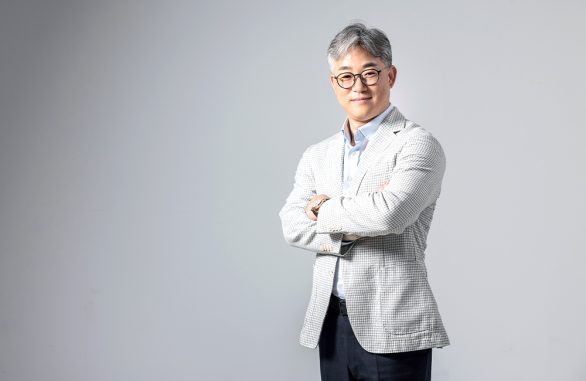
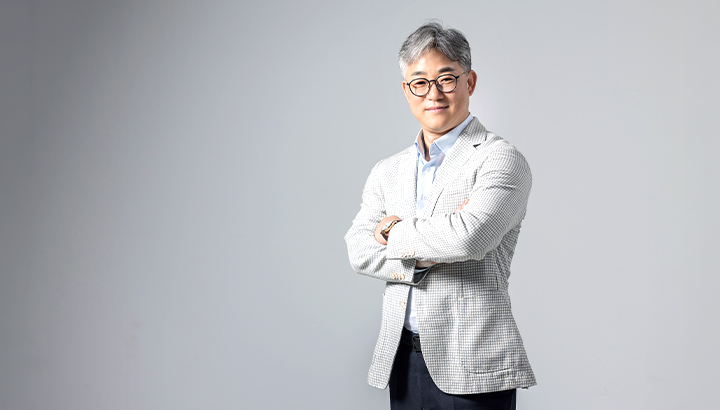
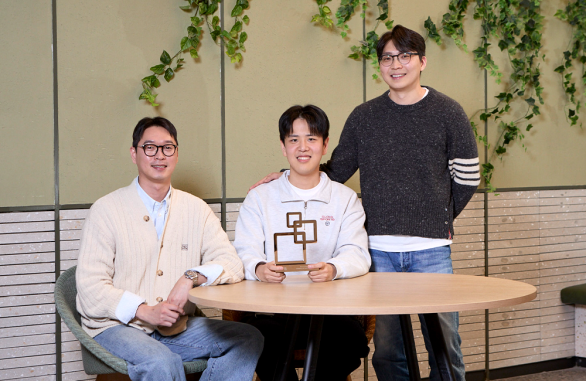
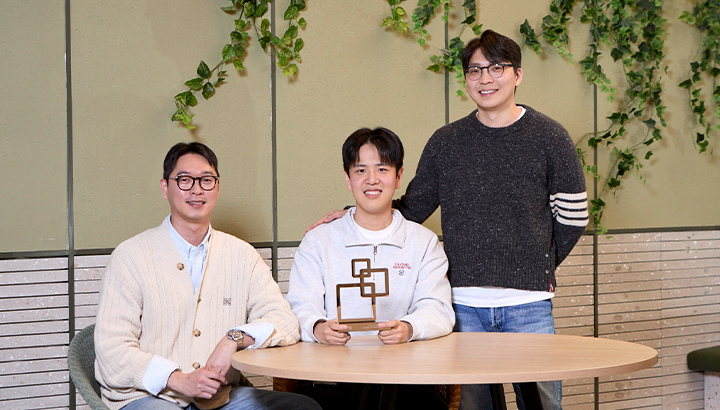
Chris Penrose, Global VP of Business Development Telco at NVIDIA
Q1. The global AI landscape is evolving at an unprecedented pace. From NVIDIA’s perspective, what do you see as the next chapter of the AI industry?
A. We see the next big chapter in AI as the rise of agentic AI systems, where generative models are enhanced with advanced reasoning capabilities for context-aware thinking, planning, and autonomous action. This evolution turns AI from merely a tool to a digital workforce at the foundation of productivity and innovation across industries, empowering enterprises with agents that continuously learn, adapt, and collaborate to manufacture data into intelligence and automate complex workflows.
Looking further ahead, a major milestone expected to build upon agentic AI is physical AI, extending agentic capabilities to robots and machines which will perceive, reason, and take action in the physical world. Physical AI will ignite the next wave of industrial transformation, enabling sectors like manufacturing, automotive, and healthcare to leverage autonomous systems that learn, adapt, and empower human workers at scale.
Q2. Amid these rapid changes, which areas are NVIDIA prioritizing for investment or strategic focus?
A. As AI increasingly becomes a foundational part of global infrastructure, we’ve evolved beyond our roots of accelerated computing to become a full-stack AI infrastructure company:
1. Scaling AI Factories for Agentic Workloads:
Manufacturing intelligence at scale is more than simple workload acceleration. It requires “AI factories” designed to power the entire AI lifecycle by tightly coupling high-density compute, resilient networking, and advanced software orchestration. As agentic AI systems mature, their advanced reasoning capabilities are expected to drive a dramatic increase in compute requirements, making efficient hardware, dynamic scaling, and fungible resource allocation critical for the next-generation AI factory.
NVIDIA is continuing to invest across its hardware stack (ex. Blackwell GPUs, Bluefield DPUs, Spectrum-X Ethernet) and full-stack inference platform (ex. NIM microservices, Dynamo, TensorRT) to meet these demands.
2. Enabling Developers to Build and Scale Agents:
To accelerate meaningful agentic AI adoption, our goal is to enable developers in every industry to build, customize, and deploy agentic AI at scale. To support this, we continue to invest in turnkey blueprints for rapid solution development (ex. AI Blueprint for telco network configuration – topical example!), open-source models (ex. Nemotron) for specialized reasoning, robust frameworks for training and lifecycle management (ex. NeMo), and pre-built microservices (ex. NIMs) for fast enterprise-scale deployment.
Q3. Many companies are shifting their attention from how to use AI to what value AI can truly create. How does NVIDIA define the real value of AI?
A. As Jensen often notes, we are entering a new AI-powered “industrial revolution” where manufactured intelligence becomes the backbone of every industry around the globe. In this context, the real value of AI lies in compounding gains in human scale and productivity and unlocking new forms of creativity and innovation.
Korea Poised to Lead the Next Wave of AI — Success Hinges on Technology, Talent, and Ecosystem
Q4. Korea has been one of the fastest adopters of AI technology. How does NVIDIA assess the potential and challenges of the Korean AI ecosystem?
A. Thanks to strategic investments across Korea’s AI infrastructure, models, and platforms, the Korean AI ecosystem is well-positioned to drive innovation across industry verticals. As agentic AI and advanced reasoning systems mature, the AI ecosystem will need to address new challenges in scaling AI factories, serving low-latency inference efficiently, integrating AI agents into workflows, and upskilling the workforce to deploy, manage, and leverage AI effectively. Korea’s leadership on AI will require continued commitment on technology, talent, and full-stack ecosystem collaboration. We see significant opportunities in everything from Digital Twins, Robotics, Chip Design and AI Agents and we are excited about the recent announcement we made with SK Group to invest in building new AI infrastructure with over 50,000 NVIDIA GPUs to boost these areas of development.
Q5. SKT has been emphasizing its Telco-based AI strategy. What strengths or distinctive advantages do you see in this approach?
A. SKT’s AI strategy embodies the right set of investments and partnerships to realize NVIDIA’s vision for the “AI-Native” telco, climbing up the value-chain to solidify their role as a sovereign AI platform provider:
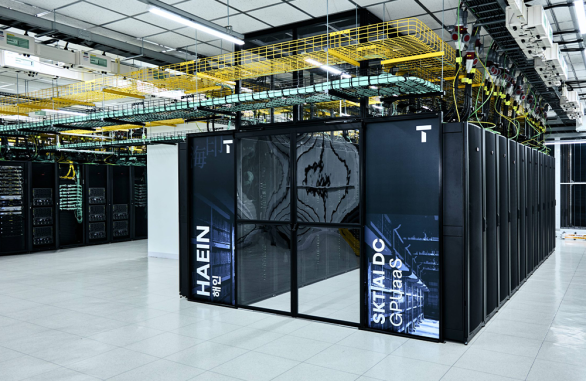
1. Sovereign AI Strategy: SKT’s sovereign GPUaaS platform forms the backbone of Korea’s national AI strategy, offering scalable, secure AI infrastructure for Korean enterprises, SMBs, and government agencies. By forming an in-house AI company-in-company, SKT’s consolidation of assets and focus on full-stack innovation sets a global example for telcos looking to streamline their AI transformation. SKT recently announced they are launching a new industrial cloud built on NVIDIA RTX PRO 6000 Blackwell GPUs to accelerate digital twin and robotics innovation.
2. Enabling Enterprise AI Ecosystem: By developing and open-sourcing multiple Korean language LLMs, SKT is empowering local enterprises, SMBs, and government agencies to build high-performance AI solutions with awareness of local culture and language. Additionally, strategic partnerships with OpenAI and Anthropic allow SKT to rapidly adopt and localize cutting-edge models, co-develop industry-specific AI services, and leverage agentic AI to automate operations, enhance customer care, and deliver personalized services.
3. SKT has also established a consortium called the Global Telco AI Alliance to accelerate the adoption of AI within the Telecom Industry and jointly developing new AI driven business models. This work in collaboration with other key telcos and ecosystem partners also ensures SKT remains at the forefront of AI innovation.
Q6. Could you summarize the core message of your keynote speech at the SK AI Summit 2025?
A. I shared how Telcos are helping build the Sovereign AI Infrastructure for their nations to drive economic growth, upskilling talent, and providing the platform for AI innovation in their countries. I talked about how telcos’ customer reach, knowledge of how to work with government, and existing infrastructure gave them an advantage to be the provider of this AI Infrastructure and AI offerings on top of these AI Factories. I also reviewed the next big opportunity in creating an AI Grid for inferencing at scale and the reasons why NVIDIA was the best platform and partner to enable the optimal inferencing infrastructure.
Q7. What outcomes or insights did you take away from your participation in the SK AI Summit 2025?
A. I had the opportunity to see how Korean enterprises, SMBs, and government agencies have been progressing in their AI adoption, as well as what requirements and outcomes are guiding the next wave of intelligent use-cases. These insights will be important as inference and agentic workloads begin to outpace training, presenting unique opportunities for telcos like SKT to build intelligent edge inference platforms such as AI-RAN and harness agentic AI to manage the increasing complexity and unpredictability of agent-to-agent communications across their network.
Q8. What message would you like to share with Korean companies and developers preparing for the AI-driven era?
A. It is critical for Korean companies and developers to maintain the current momentum around AI. While generative AI has been transformative for many industries, it is a building block for agentic and physical AI solutions which will become essential infrastructure underpinning the global economy. To capture the most value, organizations should invest in building skillsets in model deployment and fine-tuning, prompt engineering, and workflow integration, focus on creating high-quality structured data, and redesign operations to ensure intelligence is embedded into every business layer.
We are excited to support Korea’s growing AI ecosystem, offering our full-stack technology, blueprints, and partnerships to accelerate the next wave of profound innovation.