SKT has been strengthening its AI competitiveness through two key pillars — “Self-strengthening” and “Collaboration”. While enhancing its technological capabilities through the Sovereign foundation model development consortium, SKT is also actively expanding partnerships with leading global AI companies. Among them, Anthropic is working closely with SKT to co-develop a “Telco large language model (LLM)” that will help build a differentiated telco AI ecosystem.
Benjamin Mann, Co-founder of Anthropic, will be a keynote speaker at the upcoming “SK AI Summit 2025”, where leading global AI companies will share insights and discuss the present and future of AI. Ahead of his keynote session at the two-day event on November 3–4, Mann spoke with SKT Newsroom about Anthropic’s collaboration with SKT and his perspective on the potential of Korea’s AI industry.
What seems impossible today will become possible tomorrow…Continuous experimentation is essential after AI adoption
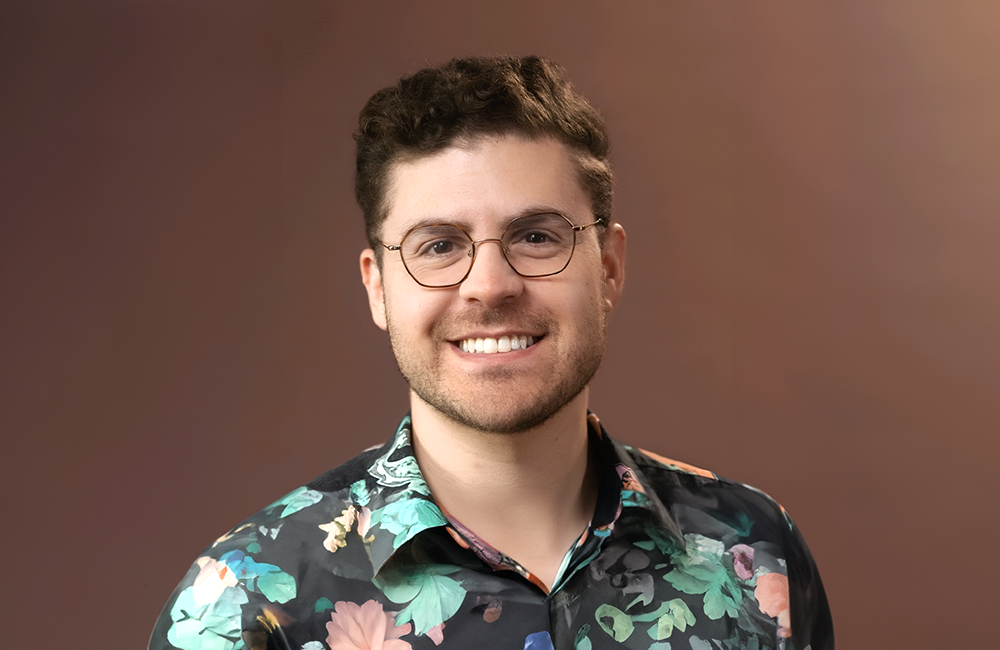
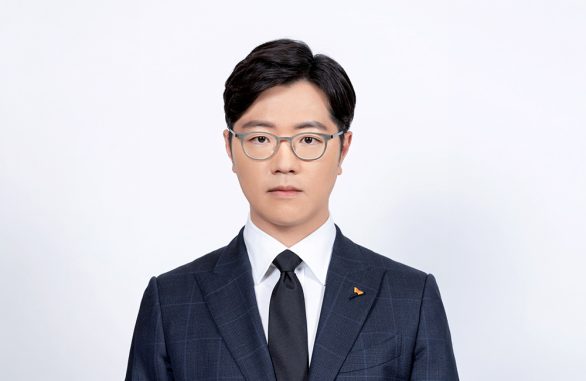
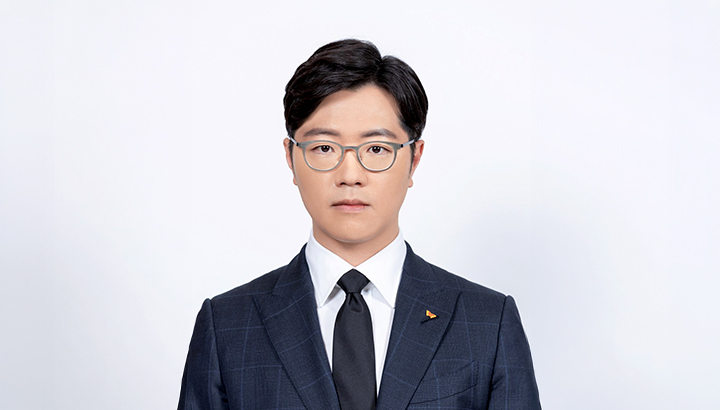
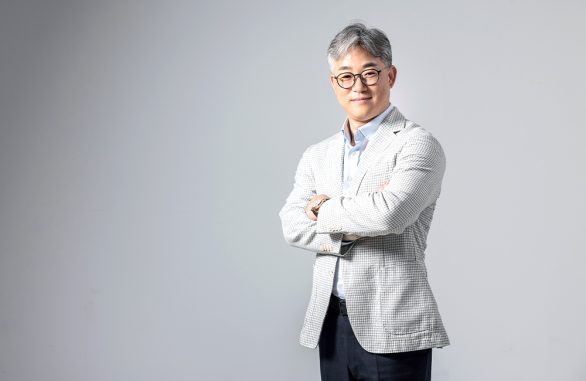
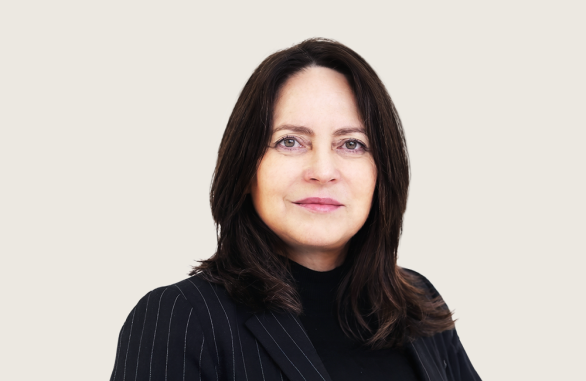
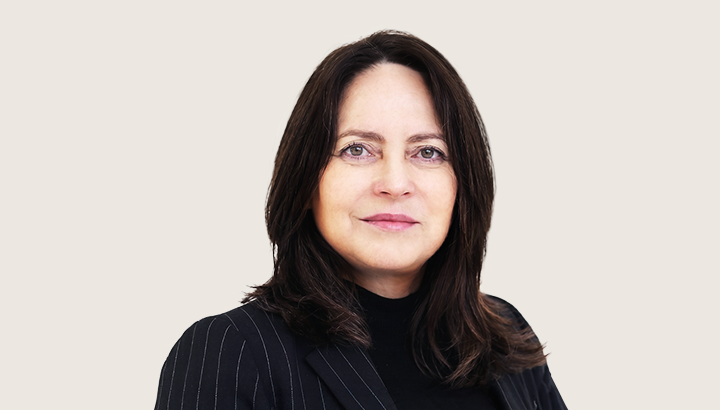
Benjamin Mann, Co-founder of Anthropic
Q1. As a co-founder of Anthropic, what do you think are the core philosophies and technological strengths that differentiate Anthropic from other AI companies?
Anthropic was founded on a fundamental belief that as AI systems become more powerful, ensuring they remain safe, steerable, and aligned with human values becomes existentially more important.
Our core philosophy centers on Constitutional AI, where Claude learns to be helpful, harmless, and honest through a published, natural language constitution of principles rather than just human feedback. This makes our models more transparent in their reasoning and more predictable in their behavior, two critical qualities for enterprise deployment. Our breakthroughs in mechanistic interpretability will allow us to understand what’s happening inside neural networks at the feature level, giving us practical tools to make Claude safer and more reliable.
Our focus isn’t on making models bigger and juicing LMArena, we’re investing heavily in making models safer at every scale.
Q2. What technological advancements do the latest versions of Claude demonstrate, especially in terms of coding capabilities?
Claude Code helps teams get more productive as they scale. At Anthropic, we doubled our engineering team and still saw a 67% increase in each engineer’s productivity thanks to the adoption of Claude Code. Usually scaling that fast reduces efficiency as new team members onboard.
We are also seeing real-world impact, both for ourselves and through our customers. For example, 90% of Claude Code’s code is written with Claude Code itself. Rakuten used Claude Code to work autonomously for seven hours on a 12.5 million line codebase, with minimal human guidance. Also, Palo Alto Networks increased feature development velocity by 20-30% and cut onboarding time from months to weeks with Claude.
In terms of our latest models, Claude Sonnet 4.5 was released on September 29 and represents a fundamental shift to how we approach coding tasks. Our largest developer tools partners like GitHub, Cursor, Cognition, and Replit have seen significant improvements and state-of-the-art coding performance from Claude Sonnet 4.5, and we continue to see real world use cases of customers building incredible projects with the model. Claude Haiku 4.5 was released on October 15, delivering strong coding performance at a fraction of the cost – ideal for teams running high-volume operations or running multiple agents in parallel.
Q3. With AI technology advancing rapidly, what are the most important factors companies should consider for successful AI adoption?
We expect human-level AI in just a handful of years, so it’s important and urgent that companies skate to where the puck is going. Try things you don’t expect to work, and don’t get discouraged if it doesn’t work the first time. Every time a new model comes out, try it again. Measure how often it works, improve your tooling, and anticipate the next generation of models being significantly smarter than the last. The capabilities that seem impossible today will be routine tomorrow. Build your infrastructure assuming AI will be dramatically better, not marginally better. The companies that start experimenting now, even with imperfect results, will have the systems and knowledge ready when these models reach human-level performance.
We’re seeing many of our Korean partners excel at this approach. SKT is transforming customer service and network operations. WRTN built Korea’s most popular AI platform by constantly experimenting with new capabilities. And Law & Company automated legal workflows that seemed impossible one year ago.
These companies started experimenting early, built institutional knowledge, and are now years ahead of their competition.
Korea: One of the world’s most promising AI markets… Partnership with SKT represents a major opportunity
Q4. Korea is rapidly driving AI innovation through infrastructure development, a vibrant startup ecosystem, and bold investment. How would you assess the strengths and potential of the Korean market?
Korea represents one of the most exciting AI markets globally. The combination of technical infrastructure, execution speed, and commitment to quality creates an environment where AI innovation can flourish in ways that are difficult to replicate elsewhere. As the Korean government advances its vision to become one of the world’s top three AI powers, the growing collaboration between the public and private sectors is expected to accelerate this goal.
What sets Korea apart is how major enterprises deploy AI for core operations in production environments. Our customers in Korea span telecommunications, legal services, AI platforms, and research institutions. The country’s rapid adoption rate, which is one of the fastest in the world, reflects a culture that embraces technology quickly while maintaining high standards.
Q5. Anthropic and SKT have collaborated on developing the telco-specialized LLM “TelClaude.” What was the unique value of TelClaude for telecoms or B2B companies?
In partnership with SKT, we created an AI that understands telecommunications. After training on SKT’s documentation, the model’s accuracy improved by 58%. It now understands network terminology, gives accurate technical answers, and responds the way telecom customers expect.
The breakthrough is that other companies don’t need massive amounts of data to get similar results. We developed methods that let any telecom company customize Claude for their specific needs quickly.
With support for Korean, English, Japanese, and Spanish, global carriers can use one AI system across all their markets. Companies get AI that actually understands telecommunications from day one, instead of spending years teaching it themselves.
Q6. What do you see as the most meaningful part of collaborating with SKT?
The most meaningful aspect of our collaboration with SKT is the opportunity to pioneer industry-specific AI that truly serves people at scale. When SKT invested in and partnered with us to fine-tune Claude for telecommunications use cases, we saw a unique chance to combine their deep telecommunications expertise with our AI safety research.
The technical feedback loop has been invaluable. When you deploy AI for telco customers, you learn fast what works and what doesn’t. SKT’s engineers provide detailed feedback on model responses, helping us understand edge cases we’d never encounter in a lab. This real-world testing at scale makes Claude better for everyone.
Most importantly, SKT thinks globally. Through the Global Telco AI Alliance with Deutsche Telekom, e&, and Singtel, they’re helping us build AI that works across languages, cultures, and regulatory environments.
Q7. At the upcoming SK AI Summit 2025, what key activities are you preparing, and what outcomes or messages do you hope to deliver through them?
At the SK AI Summit, I want to shift the conversation from “what can AI do?” to “how do I give AI agents the tools that a human would need to succeed in the same role?” We’re at an inflection point where agents are evolving from simple task executors to genuine collaborators.
My presentation will focus on what I call the three pillars of transformative agents:
● First, contextual intelligence: agents that actually understand your organization’s unique environment and learn from experience. Your hundredth task with an agent should be dramatically better than your first, just like working with a colleague who’s been on your team for months.
● Second, long-running execution for complex workflows that take hours or days. Think about debugging a production issue in a telecom network: it’s reading runbooks, checking logs, forming hypotheses, coordinating with infrastructure teams, and testing fixes.
● Third, genuine collaboration where agents push back when something doesn’t make sense, explain their reasoning transparently, and adapt to your working style.
The key message for SKT and Korean enterprises is this: agents will enable you to run parallel experiments, learn from users in real-time, and ship faster than ever. While we haven’t solved safety yet, Claude Sonnet 4.5 made huge progress on issues like prompt injection, and we expect to continue to lead the way in making agents that are deployable in your production environments with full access to the systems needed to be effective. We want to hear from you about the gaps that matter most so we can close them together.