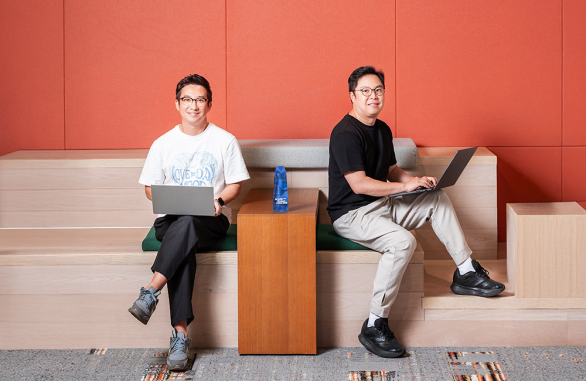
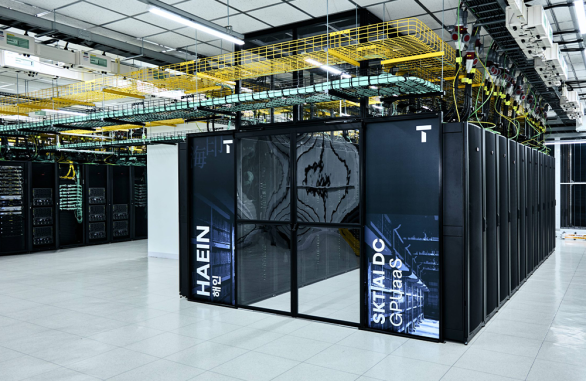
The SK Telecom Consortium, selected as an elite team for the Ministry of Science and ICT’s “Sovereign AI Foundation Model” project, is a national AI “one team” aiming for full-stack AI based on proprietary technology spanning semiconductors, models, data, and services. Participating in the consortium are SKT, Krafton, Rebellions, 42dot, Selectstar, Liner, Seoul National University and KAIST.
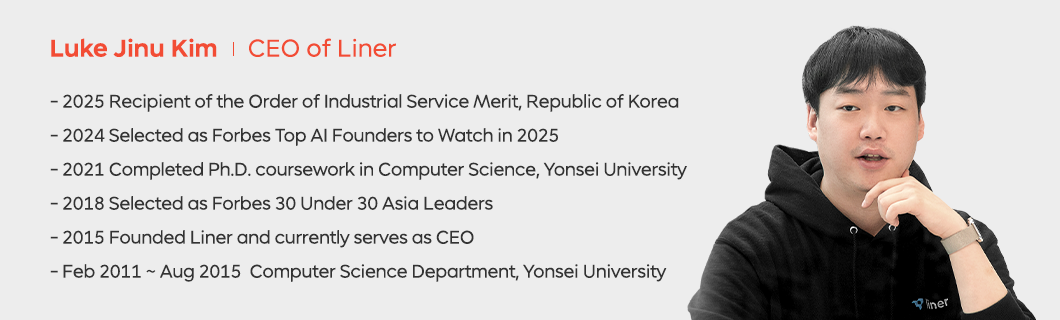
Among them, Liner is a company that develops AI agents specializing in professional knowledge and information search, rapidly gaining attention in the global AI search market by providing highly reliable answers. In the SKT Consortium, Liner is responsible for enhancing the reliability and accuracy of the Korean foundation model. We interviewed Jinu Kim, CEO of Liner, to hear about the competitiveness of the SKT Consortium and the prospects of K-AI.
*This article includes the opinions of other companies and may differ from the official position of SK Telecom.
Experience Proven by Real Service – The Strong Power of the SKT Elite Team
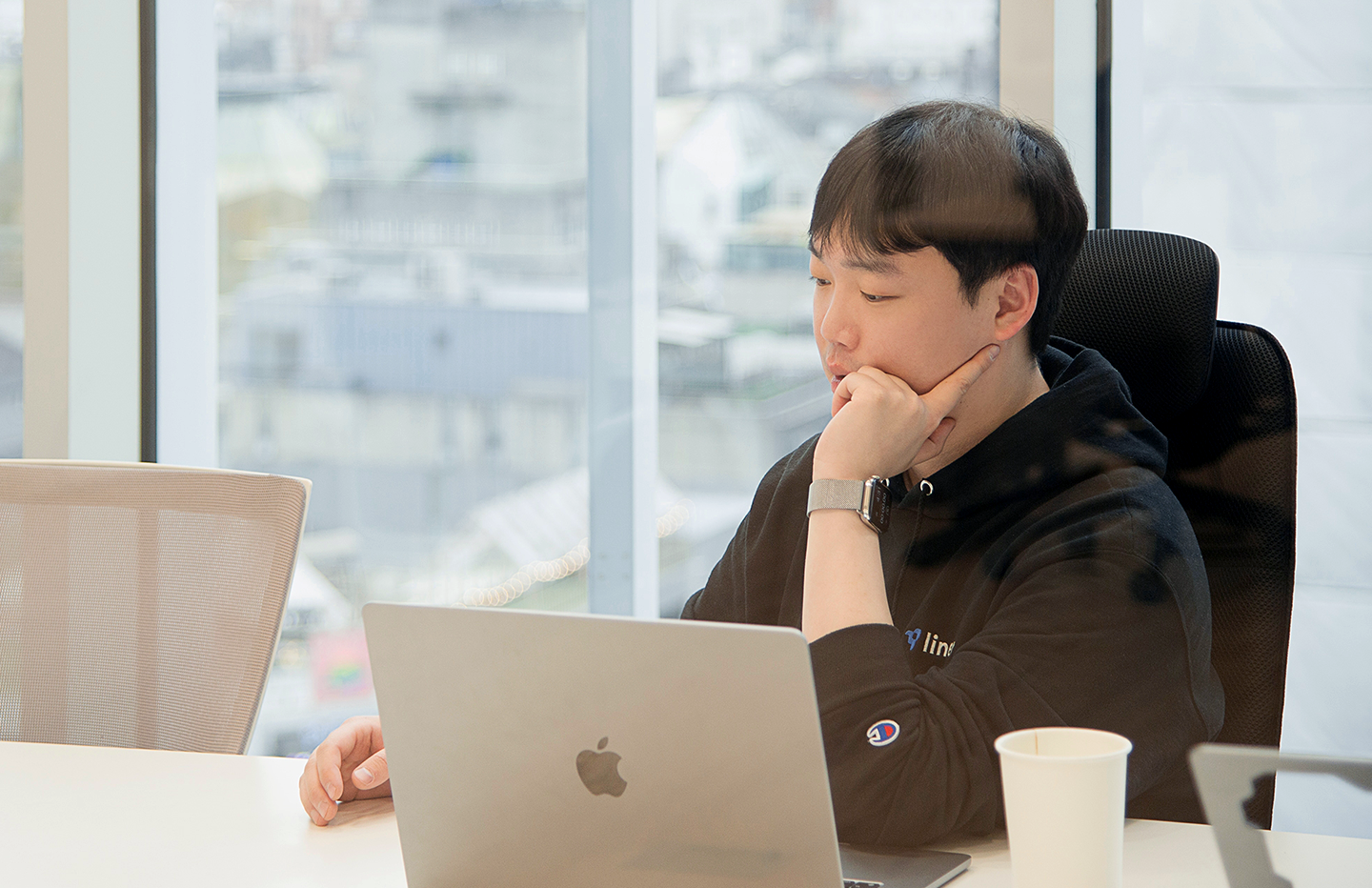
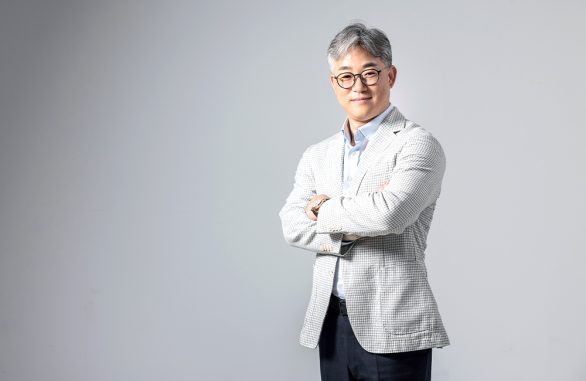
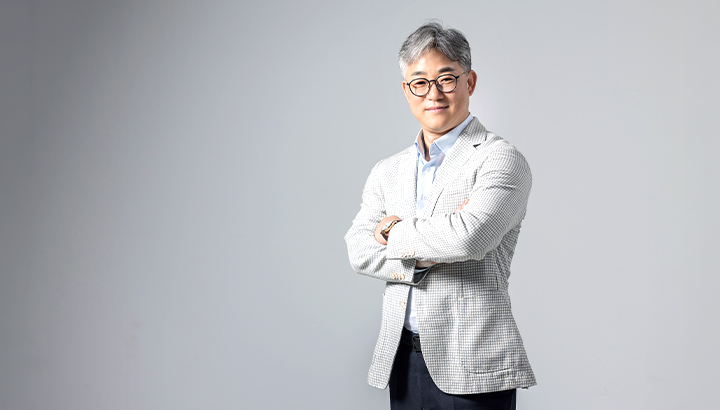
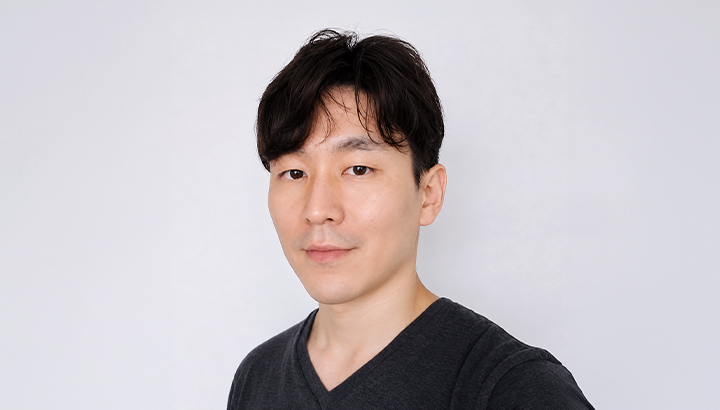
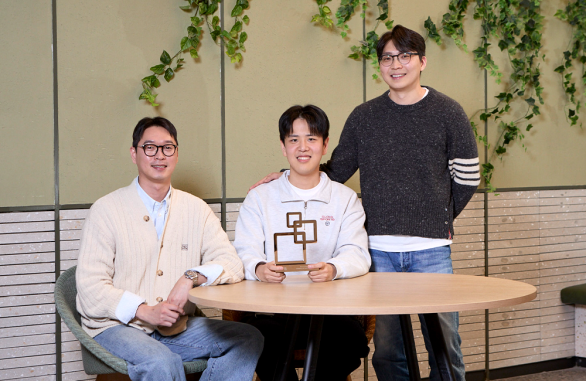
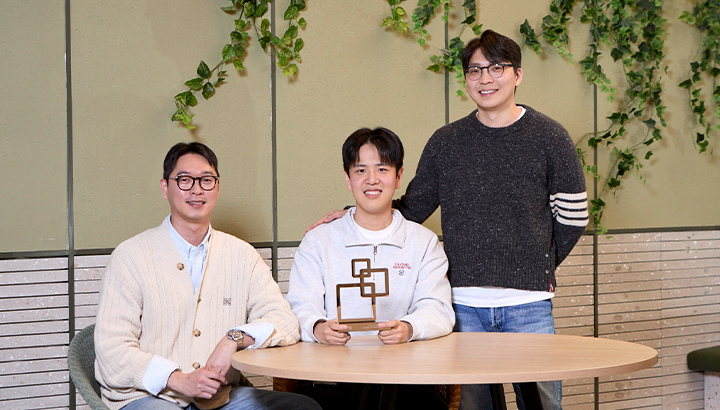
Liner CEO Jinu Kim
Q1. How do you feel about being selected as the elite team for this project, and how did Liner join the team?
A. Liner views this project as a pivotal opportunity to make a tangible impact on Korea’s AI competitiveness. We are honored to participate and are fully committed to its success.
Our decision to join the SKT Consortium was grounded in mutual trust and strong potential for long-term synergy. Even before the Sovereign AI foundation model development project, Liner had verified technical cooperation and execution capabilities through collaboration with the SKT A. (“A dot”) team. The roles and contributions of each company in the SKT Consortium are clearly defined, which allowed us to envision a convincing picture of the direction and completeness of the product we would create together. Ultimately, we decided to join the team because SKT’s was the consortium where Liner could demonstrate real synergy and achieve meaningful results.
The SKT consortium brings together outstanding companies, and because each organization’s technologies must interlock seamlessly to produce a highly refined end result, we are committed to doing our utmost at every stage of the process.
Q2. What do you think is the biggest strength of the SKT elite team?
A. I believe the biggest strength of the SKT elite team lies in experience proven by real service, not just in theory. The SKT Consortium is uniquely positioned as the only group with first-hand experience launching, competing with, and continuously improving AI services based on user data in the global market.
Liner has been selected as a top web product in the “Top 100 Gen AI Consumer Apps” announced by the global venture capital Andreessen Horowitz (a16z) four consecutive times during 2024-2025, and the only Korean services included in this list are SKT’s A. and Liner. In other words, the SKT Consortium is a team that represents the Korean AI ecosystem and is competing overseas, based on two services whose competitiveness is already proven in the global market.
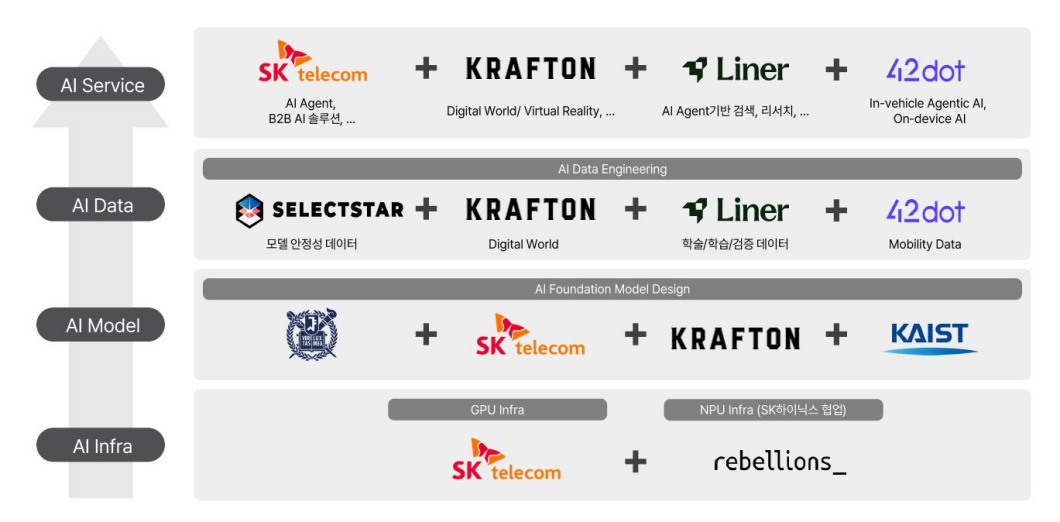
The SKT Consortium is a large-scale union of industry-academia experts. SKT is at the center, joining forces with domestic and foreign scholars from Seoul National University and KAIST, as well as leading companies in their respective fields such as Liner, Krafton, Rebellions, and 42dot. The consortium aims to realize full-stack AI covering the entire AI domain, from semiconductors to data, models, and services, reflecting a practical development philosophy that goes beyond merely improving benchmark scores to creating AI models and services with high real-world usability.
This structure that can complete the entire AI value chain with internal capabilities is an advantage rarely seen in other consortia and is, I believe, the most powerful competitive edge.
Q3. What do you think are the strengths of the K-AI model in the global competitive environment?
A. Korea’s competitive edge is that we can develop optimized models that consider the entire pipeline. In other words, not just AI model training, but also data collection and service implementation.
Furthermore, I believe the greatest strength of the K-AI model lies in the power of K-Culture which the whole world can relate to. Korean culture, such as K-POP, K-Drama, and K-Food, already holds a strong influence in the global market and has become a beloved brand.
If an AI model is born that deeply understands and learns the sensibility and context of this K-Culture, I believe it will lead to services that naturally attract, resonate with, and are utilized in the daily lives of users not only in Korea but around the world. I believe the maxim “what is most uniquely Korean is most global” will hold true in the field of AI as well.
Q4. Please tell us about the future changes in the global AI industry and the prospects for K-AI within that context.
A. The global AI industry will become mass-marketed much faster and evolve in a direction that naturally permeates all aspects of daily life. Amidst this change, Korea has a unique strength. There are not many countries in the world where the entire population is so enthusiastic about AI, actively tries new technologies, and accepts them quickly, as in Korea.
This cultural and social foundation makes Korea itself the optimal environment for creating and testing AI. In fact, when new features or services are launched, Korean users are highly responsive, providing clear feedback and specific suggestions for improvement. This becomes a very strong asset for rapidly increasing the quality of AI services.
If we experiment first in Korea, verify what solves users’ real problems, and then expand globally, we believe we will already be one step ahead when the world fully begins to utilize AI in daily life.
Korea holds a unique position as an AI testbed nation in addition to its outstanding technology, and this environment will be a very important competitive edge for K-AI to quickly establish itself in the global market.
Liner’s Competitiveness Proven through Highly Reliable Global AI Search and Research
Q5. Please briefly introduce Liner and its services.
A. Liner is a company that develops global AI search and research agents, focusing on fundamentally reducing the time and cost that users spend on information exploration. It provides answers focused on reliable sources and accurate information and is rapidly gaining attention in the global market with features that streamline complex research processes.
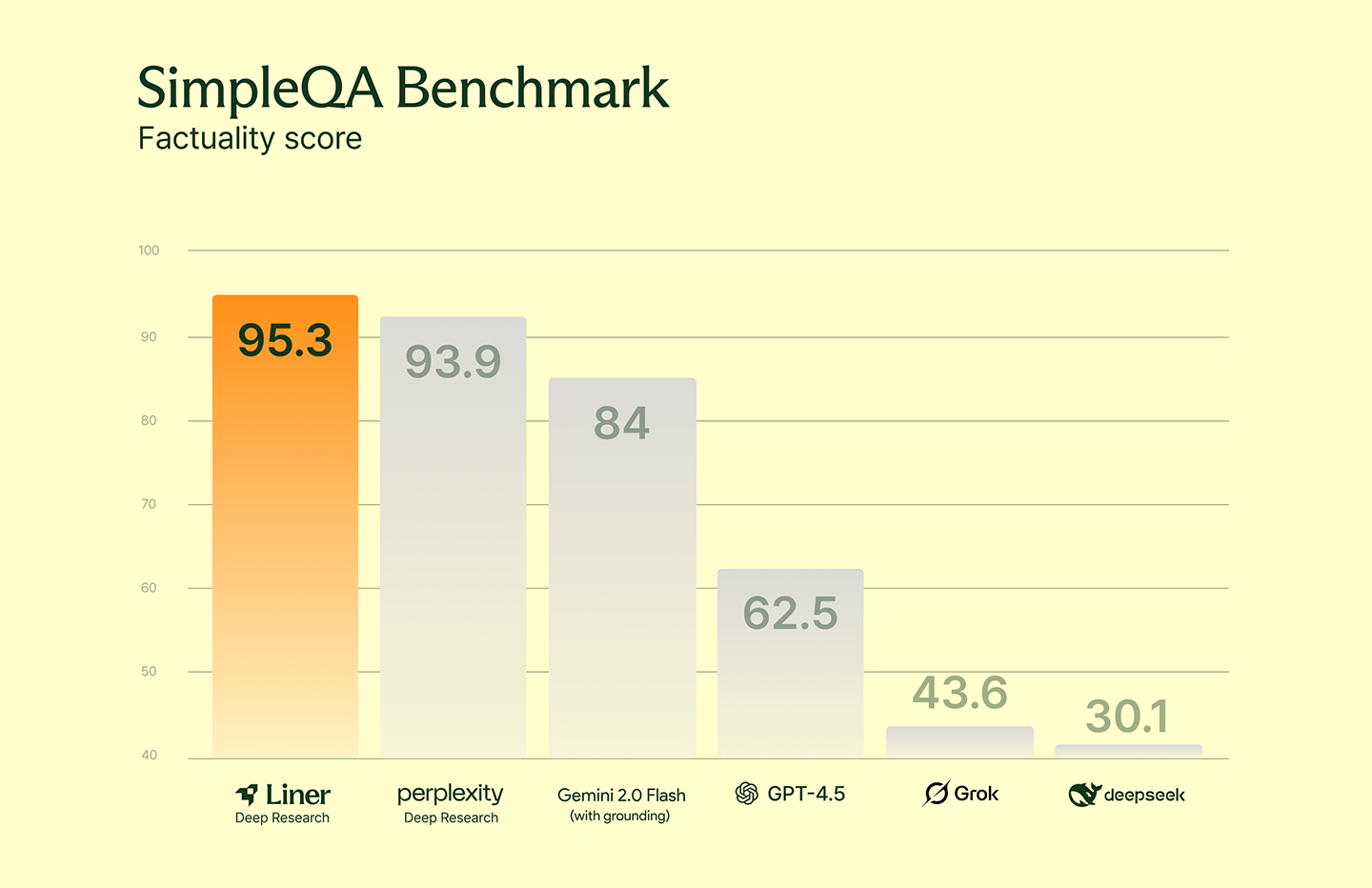
Liner Service Scores 95.3 on SimpleQA Benchmark
Based on the vast highlighting and information exploration data accumulated since 2015, we launched our AI search service for the first time in Korea in 2023 and have continuously advanced our proprietary LLM training methodology to implement a search model with accuracy and cost-efficiency. By presenting source citations at the sentence level to minimize hallucination, we officially proved our performance by recording 95.3 points on the SimpleQA benchmarkA tool for testing the performance of AI search engines., surpassing the scores of GPT-4.5 and Perplexity.
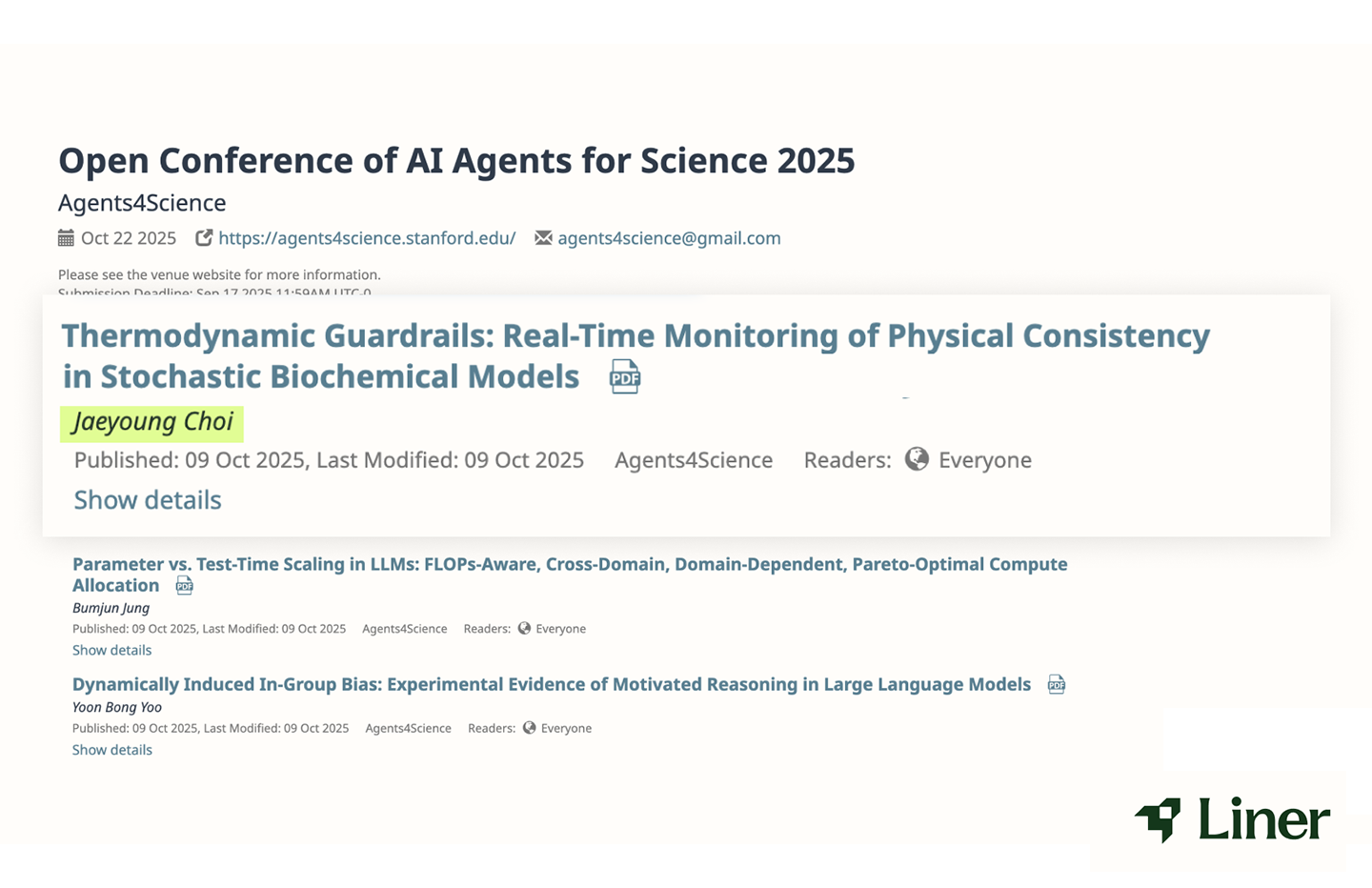
Three Papers from Liner Research AI Accepted at Agents4Science 2025.
Currently, Liner has grown into a global AI search service used by over 12 million people in more than 220 countries worldwide. Furthermore, Liner’s research AI agent is showing notable achievements in real research environments. Liner has been implementing a new research method called “Vibe Research” where AI acts like an intellectual colleague that expands human reasoning and creativity. As a result, three papers completed using Liner’s research AI agent were selected as finalists at Agents4Science 2025, the world’s first AI-author-focused academic event, internationally acknowledging our technology based on real-world usage and its research innovation cases.
Liner to Contribute to K-AI Model Going Beyond Korea to Becoming a Model that Works Worldwide
Q6. What is Liner’s role and its distinct competitive edge within the consortium?
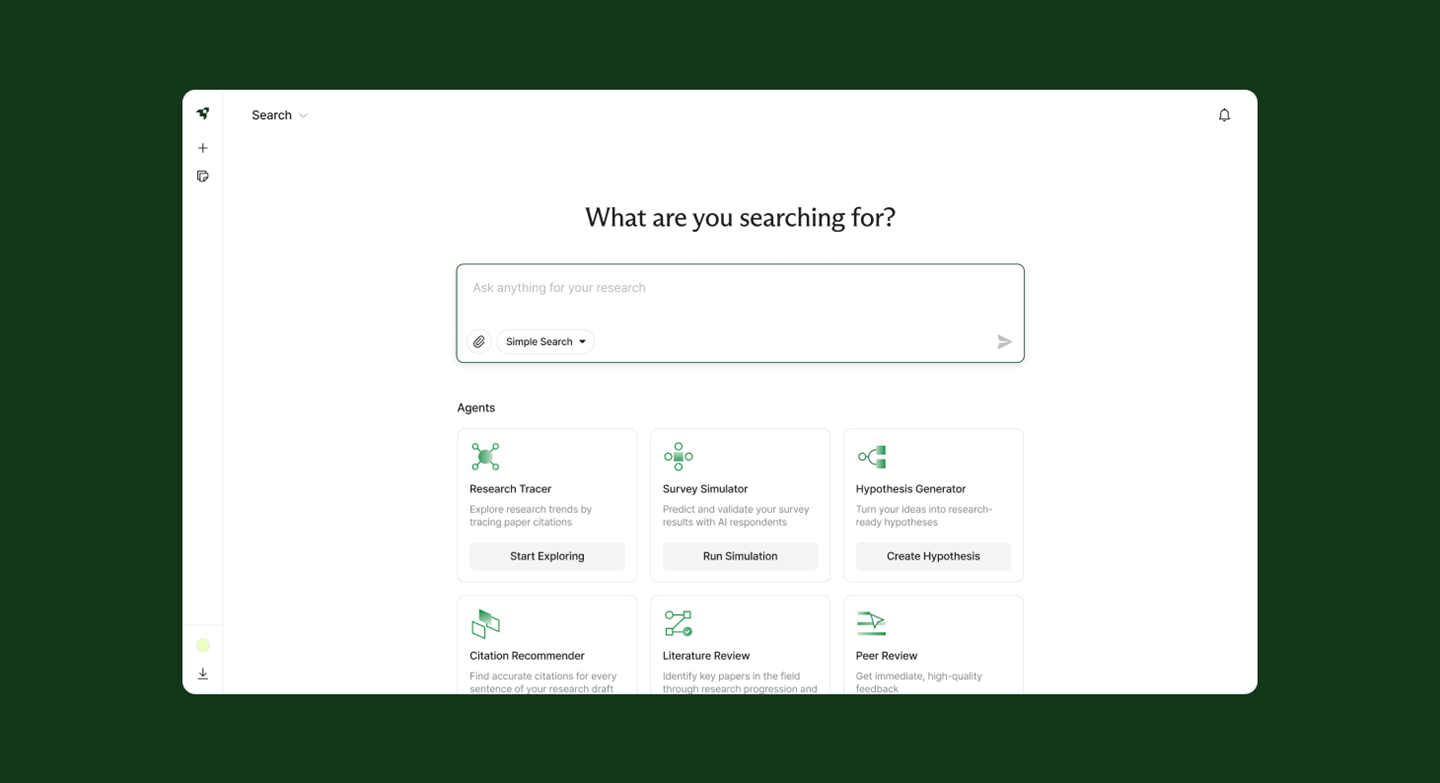
Liner Service interface
A. With our specialized agent technology for accurate AI search and information exploration, Korean users tend to be fast to reac Liner is responsible for enhancing reliability and accuracy of the Korean foundation model. We are leading the development of core features to mitigate AI hallucinations by designing an accuracy evaluation system based on a ranker model and a sentence-level reliability verification module.
Furthermore, based on world-class search LLM technology and global service operation experience, Liner plans to serve as a global export partner to ensure that the Korean AI model is used and trusted by global users beyond Korea. Our operational data and usability verification experience secured from 12 million users in over 220 countries has become an important asset for enhancing the international competitiveness of Korean AI.
Through this project, Liner intends to apply its specialized AI technology in research and academic fields to national-level projects, contributing to the establishment of a “Trustworthy AI” ecosystem. We anticipate that this will elevate the standard of the entire Korean AI industry and, at the same time, contribute to the birth of a competitive K-AI model on the global stage.
Q7. What has Liner gained from participating in the consortium?
A. Through participation in this consortium, we were able to establish closer partnerships with SKT and various other collaborating companies within the consortium. We are in active discussions on how to combine the strengths and technological assets held by each company to create greater business value. We have discovered many insights and possibilities in the process of connecting areas where each company can leverage its strengths and exploring new service opportunities together, going beyond simply executing a project.
This collaboration experience has been very helpful in seeking directions for how Liner’s technology can be utilized in a wider ecosystem, and we expect to be able to establish a more expanded collaboration model through continuous exchange with consortium companies in the future.
Q8. Liner has high global market performance. How can this experience and insight be utilized to secure the competitiveness of the K-AI model?
A. Through close observation of the usage patterns and demands of users with diverse national, cultural, and linguistic backgrounds, Liner has gained a deep understanding of the standards and expectations that an AI service must meet to succeed in the global market. We have learned from first-hand experience what the global standard is, based on actual user data, going beyond mere overseas service operation experience.
While Korea serves as an excellent testbed due to its rapid technology acceptance and high feedback density, there still are different characteristics in terms of user tendencies, information exploration methods, and AI trust criteria in markets that set global standards, such as the United States. Since Liner has already experienced these differences in practice and established successful global operation strategies, we can provide the necessary insights to ensure that the K-AI foundation model being developed this time is not limited to satisfying users in Korea but is naturally used and competitive in the global market.
The user feedback, understanding of cultural differences, and service optimization experience that Liner has accumulated in the global market over the past few years will be an important foundation for the K-AI model to move beyond a “Korean model” and become a “model that works worldwide.”
Q9. Please tell us about Liner’s future plans amidst the changing environment of the AI industry.
A. The value of technology depends not on the technology itself, but on how it changes the user’s daily life and what problems it solves. This is the point where Liner is focusing. Liner is focused on assisting the entire process of knowledge work with AI agent technology, helping users make better decisions.
Liner plans to build an executable AI agent system that can quickly and accurately perform complex knowledge tasks such as information exploration, analysis, and research design. Our goal is for Liner to act like the user’s “second brain,” dramatically increasing the productivity of knowledge work and creating an environment where anyone can learn more deeply and explore more widely. Furthermore, based on this technological evolution, Liner is poised to redefine the methodology of knowledge work.