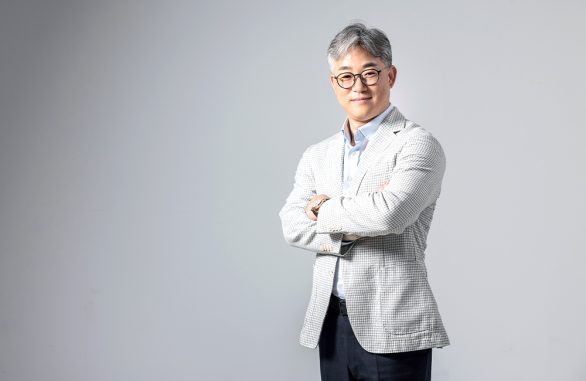
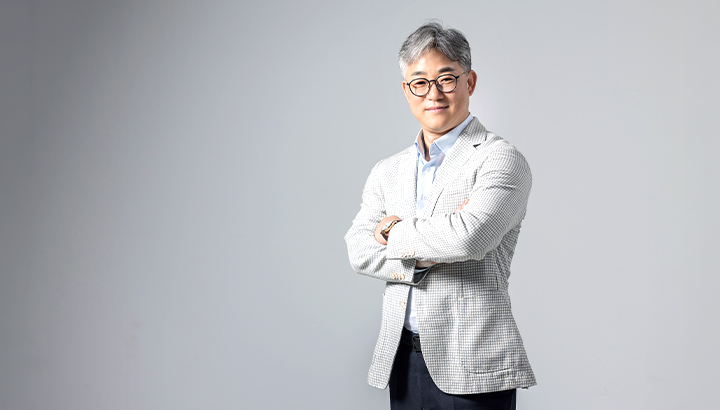
At the upcoming SK AI Summit 2025, where leading AI companies from Korea and around the world gather to discuss the present and future of artificial intelligence, Chase Lochmiller, CEO and co-founder of Crusoe, will take the stage as a keynote speaker.
Founded in the United States in 2018, Crusoe is an energy-driven AI infrastructure company that builds and operates large-scale AI data centers. The company is drawing global attention as a next-generation AI infrastructure leader with the 1.2-gigawatt “Stargate” AI data center in Abilene, Texas, recognized for its rapid construction speed and cost-efficient energy model.
Ahead of the two-day event taking place on November 3-4, SKT Newsroom sat down with Lochmiller to discuss the potential of the global AI infrastructure market and his views on Korea’s growing role in this space.
Cloud Platforms: Poised to Be a Key Growth Area Over the Next Decade
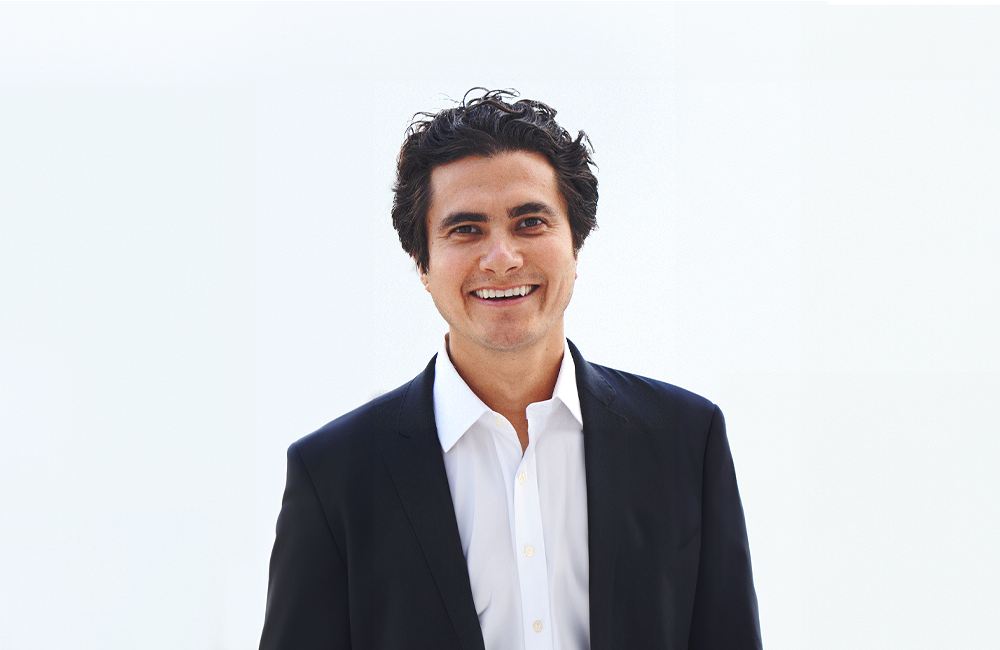
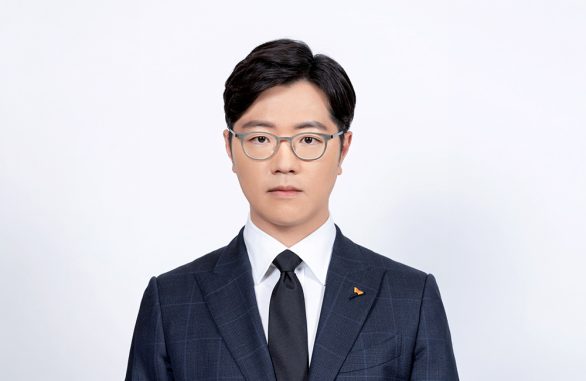
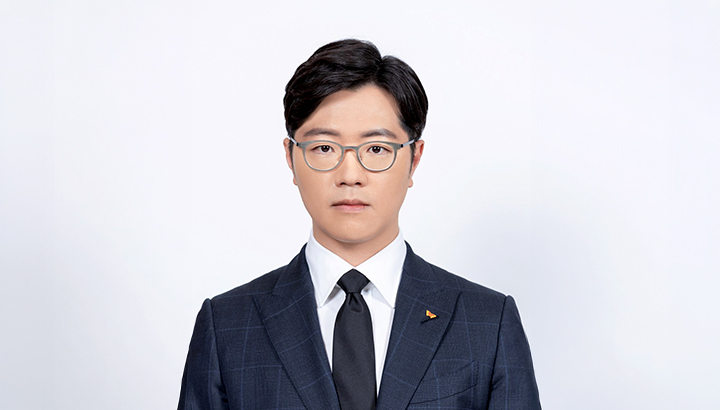
Chase Lochmiller, CEO of Crusoe
1. Could you please introduce yourself and Crusoe?
I’m Chase Lochmiller, and I’m the CEO and a co-founder of Crusoe. At Crusoe, our mission is to accelerate the abundance of energy and intelligence.
We call ourselves the AI factory company. This means we build the large-scale physical infrastructure – the AI factories – that powers artificial intelligence, and we create the software layer that makes those factories useful.
We were founded with a fundamental understanding: energy is at the core of computing. Our “energy-first” model is designed to solve the massive scaling challenges AI faces at its most foundational layer: the energy layer.
2. Could you share your professional background and what led you to establish Crusoe? How do you describe your current role in the company?
My background is in computer science and quantitative finance. I was a quantitative researcher and trader at Jump Trading and GETCO where I built large-scale, high-performance computing systems for complex financial modeling. It was there I saw firsthand the exponential growth in demand for computation.
My Crusoe co-founder, Cully Cavness, came from the energy industry and was troubled by the scale of routine gas flaring – a waste of energy and a significant source of methane emissions.
We founded Crusoe to solve both of these problems at once. We saw a future where computation would be constrained by energy, and we connected the dots: using stranded energy to power the future of computing.
We’ve flipped the traditional script by bringing our data centers directly to the sites of energy production, instead of the other way around, because it turns out that it’s easier to move data than it is to move energy.
My role as CEO is to set our strategic vision. We believe we have a once in a lifetime opportunity to build a generational business focused on manufacturing and orchestrating the intelligence that the future economy will run on. My job is to ensure our “energy-first” model scales to meet this challenge, driving both our AI-optimized data center business and our Crusoe Cloud platform business.
3. How do you view the growth potential of the AI infrastructure market?
We’re undergoing one of the greatest economic transformations that humanity has ever experienced. And fundamental to that are two pillars: energy and intelligence.
For the first time in human history, we’re actually able to manufacture intelligence. But this is creating incredible scaling challenges, which we’re seeing most acutely at the most foundational layer: the energy layer of the infrastructure stack.
The market for the infrastructure that solves this energy and scaling bottleneck – the AI factories, the power, the cooling, and the cloud platforms that enable AI innovators – is the defining growth story of the next decade.
4. What are Crusoe’s core competitive advantages and long-term vision in the highly competitive global AI infrastructure market?
Our “energy-first” approach is our core differentiator.
1. Energy-First Model: We build our data centers at the sites of abundant energy – often stranded or curtailed – allowing us to secure low-cost, scalable power.
2. Vertical integration: We are an AI factory company, not just a data center builder. We build the physical infrastructure and the critical software layer that makes those AI factories useful and enables them to actually produce intelligence from these massive investments.
3. Veolocity: Thanks to our modular designs and in-house manufacturing facilities, our AI factories can be built and deployed much faster than traditional data centers, bringing capacity online in months, not years.
Our long-term mission is to accelerate the abundance of energy and intelligence. We are building a generational business focused on manufacturing and orchestrating the intelligence the future economy will run on.
“Korea: One of the World’s Most Dynamic and Advanced AI Markets… In AI, Competitiveness Is All About Speed”
5. Crusoe has gained significant attention as a key partner in the Stargate Project. What led to your involvement in this initiative, and what specific role does Crusoe play within the project?
Crusoe is constructing the flagship 1.2 gigawatt Stargate AI data center in Abline, Texas.
Crusoe was brought in as a key partner precisely because of the speed at which we could deliver. And, we’re proud that within a year, the first two buildings were energized, a remarkable feat of speed for a project of this scale.
What you see in Abilene is the new blueprint for large-scale data center development, and we look forward to continuing to build these AI factories around the world.
6. As the use of AI expands across industries, the power density and cooling demands of data centers are rising accordingly. What innovative technologies or designs is Crusoe implementing to address these challenges?
On the cooling front, in Abilene, we have installed a closed-loop, non-evaporative liquid cooling system, which is designed to significantly reduce our water footprint. Water in the system is continuously recirculated, with heat rejected via air-cooled chillers, so the facility does not consume any water as part of the heat-rejection process. You only fill it once.
7. How does Crusoe view the AI infrastructure market in South Korea? What do you think are the most important factors SK Telecom should consider as we build out this infrastructure?
We see South Korea as one of the most dynamic and sophisticated AI markets in the world. We are very impressed with the leadership from companies like SK Telecom in developing world-class foundational models (LLMs) and deploying AI-native services.
Like all companies, we believe the single most important factor for SK Telecom is velocity. The AI race is moving at an unprecedented speed. The ability to deploy large-scale compute capacity in months, rather than the traditional multi-year data center construction timeline, will be the key competitive differentiator. Any infrastructure strategy must therefore be evaluated on its ability to deliver speed and scale, solving the power and capacity bottlenecks without waiting years for the conventional grid to catch up.
8. What key message will you share through the keynote speech at SK AI Summit 2025? And what outcomes are you expecting to achieve through this participation?
In my keynote, I’ll give an inside look at how Crusoe is building some of the world’s biggest AI factories at record speed. I hope to share some of our best practices for the industry to advance and how we can all work together to usher in a new era of intelligence.