Global credit rating and research firm Morningstar DBRS recently assessed telecommunications operators as practical and well-positioned players capable of executing large-scale sovereign AI projects, in its report Telecoms Are Well Placed to Benefit From Sovereign AI Infrastructure Plans.
In an interview with SKT Newsroom, Scott Rattee, Senior Vice President at Morningstar DBRS and lead author of the report, shared his perspectives on the potential of telecom-led sovereign AI initiatives and discussed Korea’s Sovereign AI Foundation Model project.
* This article includes the views of external organizations and may not necessarily represent the official position of SK Telecom.

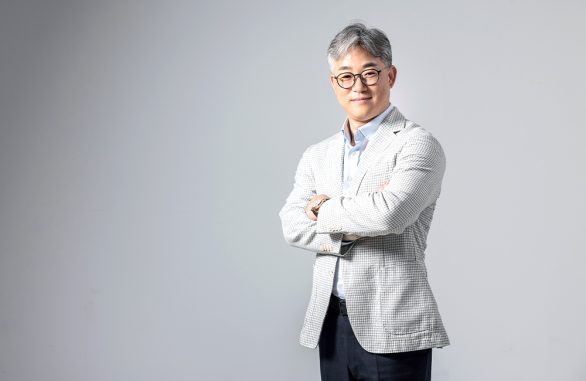
Scott Rattee, CFA and Senior Vice President at Morningstar DBRS
Telecom Operators as Trusted Partners in Building National Sovereign AI
Q1. Could you introduce yourself and your professional background?
My name is Scott Rattee, and I am a senior vice president and team lead responsible for Morningstar DBRS’ global technology, media, and telecom (TMT) credit coverage.
I have been with Morningstar DBRS since 2017, working in the Corporates credit rating group. Prior to Morningstar DBRS, I was in equity research in Toronto and New York for approximately 13 years.
I wrote the commentary Telecoms Are Well Positioned to Benefit From Sovereign AI Infrastructure Plans to highlight the potentially important role that telecom operators are expected to play in the development and growth of sovereign AI over the next several years.
Q2. In your recent Morningstar DBRS report, you pointed out that telecom operators are well positioned to play a central role in sovereign AI infrastructure. What were the key factors that led to this assessment?
Morningstar DBRS views telecoms as well suited to participate, and indeed drive, the development of sovereign AI solutions.
First, telecoms have vast experience in the management of large communications networks that provide critical communication infrastructure. Telecoms directly own or have long-term partnerships with fibre networks and data centres in addition to a growing relationship with power producers. This core competence positions them well to integrate and build sovereign AI facilities and leverage their high-speed fibre networks to support sovereign AI development.
Additionally, telecoms are already responsible for the design, construction, and maintenance of communications networks representing a critical piece of modern infrastructure that is already compliant with laws and regulations of the local, regional, and/or national jurisdiction and that align with cultural norms.
As a result, both long-term government relationships and operations within the pre-existing regulatory framework position telecoms as a trusted partner in the development and ongoing operations of highly sensitive sovereign AI infrastructure.
Q3. If a telecom operator like SKT were to take a leading role in building Korea’s sovereign AI ecosystem, what new opportunities or industry shifts do you think could emerge beyond network infrastructure?
Morningstar DBRS believes that telecom operators that are able to execute successfully on sovereign AI infrastructure plans will have gained considerable experience and credibility such that they should be well positioned to enhance their enterprise service offering (domestically and, potentially, internationally.)
This expanded enterprise service offering may be independent or accomplished with partners, thus extending the scope of service offering and possibly time to market.
Q4. In the global race for sovereign AI, what advantages do you believe Korea uniquely possesses? And what potential risks should Korea be mindful of?
Korea is well regarded and widely recognized for its advanced technological capabilities, which include a leadership position in high-end memory chips and advanced semiconductor expertise (i.e., chip design and fabrication).
Further, as confirmed by independent performance testing providers such as OpenSignal, Korea has an exceptional 5G and fibre-optic communications network that is very well suited to support the rapid development and growth of data-intensive AI applications.
Finally, there is a history and business culture of successful public/private partnerships, with the government working together with globally recognized Korean companies (SKT, Samsung, Hyundai), which has fostered an effective ecosystem of new technology development. Sovereign AI has the potential to be a defining technology over the next decade, but it is expected to be highly capital intensive.
One area of potential concern is the efficient allocation of capital given the large scope of the sovereign AI program and array of players each competing for resources and the potential dilution of human capital if numerous objectives are pursued at the same time without appropriate prioritization.
Q5. Korea is pursuing the Sovereign AI Foundation Model project to develop an independent AI model. What do you consider to be the most critical factors for successfully carrying out such a project?
Morningstar DBRS would evaluate several key components of the government-led initiative
including:
1) the amount and sources of capital funding
2) the government’s commitment to sovereign AI development (including a willingness to address regulatory hurdles)
3) the ability to prioritize and establish timely objectives
4) the ability to secure hardware in a timely fashion
5) the availability of secure power and storage
6) the track record of similar large-scale national initiatives
Q6. As sovereign AI initiatives become more common across countries, how do you expect the global AI market to evolve?
Like the evolution of the internet, which has had a profound impact on every aspect of the global economy and society, AI is likely to materially change how business is conducted, how economies grow, and how people live day to day. For organizations that are part of the AI ecosystem, this will likely mean significant long-term capital investment and the need to remain nimble as new opportunities arise.
SKT Positioned to Successfully Lead Korea’s Sovereign AI Foundation Model Project
Q7. SKT is the only telecom operator among the five selected consortiums in Korea’s foundation model project. How do you assess SKT’s position and likelihood of success?
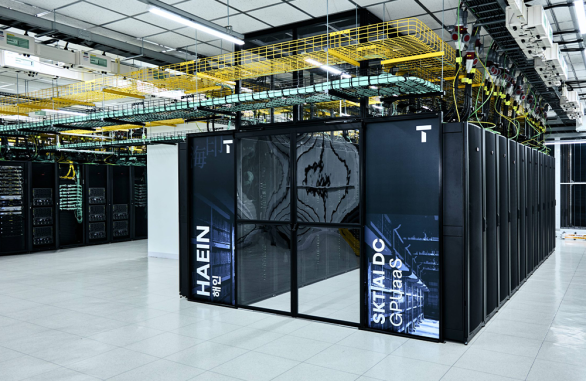
SKT’s inclusion is a prescient choice by the Korean government, and so too is the designation of SKT as one of two consortiums that will support two of the elite teams (Naver Cloud will support one elite team) in the government-led initiative as a GPU and GPU service supplier. While Morningstar DBRS would continue to evaluate the teams based on the broad criteria established in question 5, SKT’s experience with data centers and AI capabilities (i.e., ability to execute innovative strategies to develop AI models) combined with its vast operating experience of complex networks suggests a high degree of optimism for a successful outcome.
Q8. In a competitive landscape dominated by global tech giants such as Google and OpenAI, where do you see the SKT consortium’s most distinct opportunities?
SKT is well established as a leading global telecom provider, and Korea is recognized as perhaps the most fibre-connected market in the world, ahead of the likes of Japan, Spain, and Sweden.
From this base, the most distinct opportunity for the SKT consortium would be to burnish its AI capabilities and establish itself as a highly innovative developer of Korean-language AI models that are uniquely designed and aligned with the cultural norms of the Korean market.
Q9. From your perspective, what would be the most important strategic advice for the SKT consortium?
It would be to leverage your consortium’s strengths so that it can address its greatest challenges and address them head on.
Q10. For non-English-speaking markets like Korea with unique linguistic and cultural characteristics, what do you see as the main strengths and challenges of a telecom-led sovereign AI model?
Morningstar DBRS sees several benefits for a telecom-led sovereign AI model. First, given the highly sensitive nature of sovereign AI infrastructure plans, national incumbent telecom providers are a natural and secure sovereign AI partner. Telecoms are already well known and have established relationships with regulators and/or local/regional or national levels of government. Further, national incumbent telecom providers are already aligned with national laws/regulations, unique business practices, and unique cultural and linguistic norms. Further, national incumbent telecom providers have vast experience developing and operating highly complex networks.
In terms of challenges, Morningstar DBRS acknowledges the significant amount of capital investment required and the potential to have network integration issues if a telecom relies on older network equipment. There is also the potential issue of talent acquisition and retention as telecom operators are often competing with technology giants and/or highly innovative rapid growth enterprises for highly specialized professionals such as data scientists and machine learning engineers.